
For most of the twentieth century, business awards existed within a relatively contained ecosystem. Industry bodies gave them out. Trade publications covered them. The people in the room understood their significance; everyone else moved on. The trophy sat on a shelf. The plaque went on a wall. Life continued.
That world no longer exists.
The convergence of digital media, global connectivity, and an increasingly credibility-hungry marketplace has transformed what a business award means, who notices it, and what it is capable of doing. A recognition that once rippled gently through an industry now travels across continents in hours. It surfaces in investor due diligence reports. It lands in the inboxes of potential partners in markets the recipient has never entered. It tells a story in three seconds to someone who has never heard of the company and will decide in three more seconds whether to keep reading.
The trophy was always a symbol. What has changed is the size of the audience reading the symbol, and the sophistication with which the most forward-thinking organisations are learning to wield it.
Credibility in the Age of Noise
Consider the landscape any serious business leader is navigating right now. The barriers to claiming excellence have never been lower. Every company has a website that says it is an industry leader. Every LinkedIn profile signals thought leadership. Every pitch deck opens with a vision statement that sounds indistinguishable from the last ten pitch decks the investor sat through.
In a world where everyone is claiming excellence, third-party validation has become one of the scarcest and most valuable currencies in business.
A well-structured, rigorously judged global recognition does something that no amount of self-promotion can replicate: it introduces an external voice into the conversation. It says, with institutional authority, that an independent body of experts examined this organisation against a credible set of criteria and found it worthy. That shift from self-assertion to external affirmation is not cosmetic. It is the difference between a claim and a credential.
The businesses that understand this are not waiting to be nominated. They are actively seeking out platforms that offer genuine rigour, global reach, and the kind of association that elevates rather than merely decorates. A Global Business Excellence Award on a company’s profile is not the end of the story. In the hands of a smart leadership team, it is the opening line of several new ones.
The Network Effect No One Talks About
There is a dimension of global business recognition that rarely makes it into the acceptance speech but is, in practice, often more valuable than the award itself: the room.
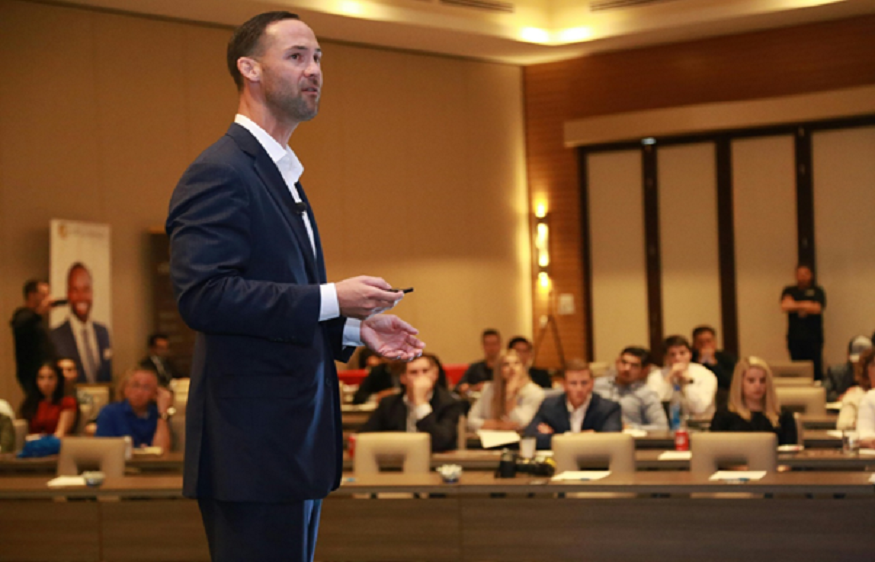
The people who gather at a Global Excellence Conclave are not a random cross-section of the business world. They are a curated concentration of individuals and organisations at the top of their respective fields, all operating with a shared orientation toward ambition, excellence, and growth. The conversations that happen in those corridors, over those dinners, at those roundtables, carry a quality that is almost impossible to replicate through any other means.
Strategic partnerships have been formed at award ceremonies. Investors have identified companies they would never have encountered through conventional channels. Leaders who sat down at the same table because they were both finalists in the same category have gone on to build ventures together that neither could have built alone.
This is not accidental. It is structural. The very act of convening people around a shared standard of excellence creates a network whose density and quality differ fundamentally from the networks built through ordinary professional channels. When your organisation earns a seat in that room, it earns access to a form of social capital that compounds quietly and powerfully over time.
What the Judges Are Actually Evaluating
The credibility of any recognition is only as strong as the integrity of its process. And here is where the global awards landscape, if viewed uncritically, can mislead.
Not all awards are created equal. The proliferation of pay-to-win trophies, self-nomination ceremonies with no meaningful vetting, and badge mills that offer recognition to anyone willing to purchase a package has created real noise in the ecosystem. A discerning observer knows this. An investor, a partner, a journalist doing their due diligence knows this.
What distinguishes a meaningful recognition from a manufactured one is the rigour of the evaluation framework. Is the judging panel genuinely independent? Are the criteria publicly stated and substantively assessed? Does being a finalist mean something was earned, or merely submitted? Does the organisation behind the recognition have a track record, a reputation, and a community that extends beyond the ceremony itself?
Business leadership awards that survive serious scrutiny share certain characteristics. They measure outcomes, not just intentions. They examine governance and culture alongside financial performance. They look at impact, not only profit. They benchmark nominees against a global standard rather than a regional one, because the businesses shaping the future are competing in a global arena regardless of where they are headquartered.
Leaders who align themselves with recognitions of this calibre are not just collecting credentials. They are signalling, to every stakeholder who matters, that they are willing to be held to a genuine standard.
Influence as Strategy
The most sophisticated use of global recognition is not retrospective. It is prospective.
The companies that derive the greatest long-term value from business excellence awards are those that understand recognition as the beginning of a strategic narrative, not the conclusion of one. They use the moment to enter new markets, because a global award is a lingua franca that crosses language and cultural barriers in ways that marketing materials cannot. They use it to attract talent, because the best professionals in any field want to work for organisations that the world has noticed for the right reasons. They use it to anchor conversations with partners and investors who need a reason to believe before they are ready to commit.
They use it, in short, as an instrument of influence. Not to impress, but to move things forward.
This is the quiet revolution underway in the global awards space. The organisations leading their industries are not the ones with the longest trophy shelves. They are the ones who understand that recognition, deployed with strategic intelligence, reshapes perception. And perception, at the scale at which global business operates, is power.
Bottom Line
Here is the question worth sitting with: in your industry, in your market, in the minds of the stakeholders who shape your organisation’s trajectory, who is being perceived as the standard of excellence right now?
Someone is occupying that position. It may be a competitor. It may be an adjacent player who has been more intentional about how they show up on the global stage. It may be a newer organisation that has moved faster, understood the ecosystem better, and invested earlier in building the kind of credibility that opens doors before a word is spoken.
The global recognition landscape, for all its complexity and its noise, offers something genuinely rare: a legitimate, scalable, internationally legible way to say that what you have built is worth the world’s attention.
The trophy is real. But it was never really about the trophy.
It was always about what the trophy makes possible.